
Search Tucson Property Records
Tucson property records include deeds, mortgages, liens, and other real estate documents for Arizona's second largest city. All property recording for Tucson addresses happens through the Pima County Recorder's Office since the city sits within Pima County. The recorder maintains land transaction records while Tucson's Planning and Development Services handles permits, zoning, and development reviews. This guide explains where to find property ownership documents and how to use Tucson's local planning resources. Between the county recorder and city planning systems, you can research almost any aspect of a Tucson property.
Tucson Quick Facts
Where Tucson Property Records Are Filed
The Pima County Recorder's Office handles all property recording for Tucson. They have two locations in the city. The downtown office is at 240 N Stone Avenue in Tucson. The eastside office is at 6920 E Broadway Blvd Suite D. Both locations are open Monday through Friday from 8:00 AM to 12:00 PM and 1:00 PM to 5:00 PM. You can reach them by phone at (520) 724-4350.
Recording fees follow the state schedule. Most documents cost $30 to record. Plats and surveys have different pricing with the first page at $24 and additional pages at $20 each. Copies run $0.25 per page. Certified copies cost an extra $1 per document. You can pay by cash, check, or card at either office location.
The Pima County Recorder processes land transactions including deeds, deeds of trust, releases, liens, and easements. Documents received after 4 PM Tucson time get processed the next business day. Most recordings take just a few minutes if you come in person. Mail recordings take longer since the office must process and return your documents by mail.
Searching Tucson Property Documents Online
Pima County offers free online access to recorded property documents. The Pima County Public Search lets you look up deeds, mortgages, and other recorded papers from your computer. You can search by owner name, recording date, document type, or book and page number. The database includes documents going back many years.
Once you find a document, you can view a preview image for free. The preview shows enough to verify you have the right record. If you need a full copy or certified version, you can request one from the recorder's office. Many title companies and real estate agents use this search daily for their work.
The search works best when you have the current owner's name. Spelling matters. Try different name variations if your first search does not return results. For common names, add other search filters like date range or document type to narrow things down. The recorder's staff can help if you have trouble finding what you need.
Note: Online searches show recorded documents only. Pending recordings may not appear for a day or two after filing.
Tucson Planning and Development Services
The city's Planning and Development Services Department (PDSD) manages zoning, permits, and development review for Tucson. While property ownership records stay at the county, PDSD controls what you can build and how you can use land within city limits. Their phone number is (520) 791-5550 and you can email them at pdsdinquiries@tucsonaz.gov.
The PDSD website shown below provides information about permits, inspections, and planning services available to Tucson property owners.
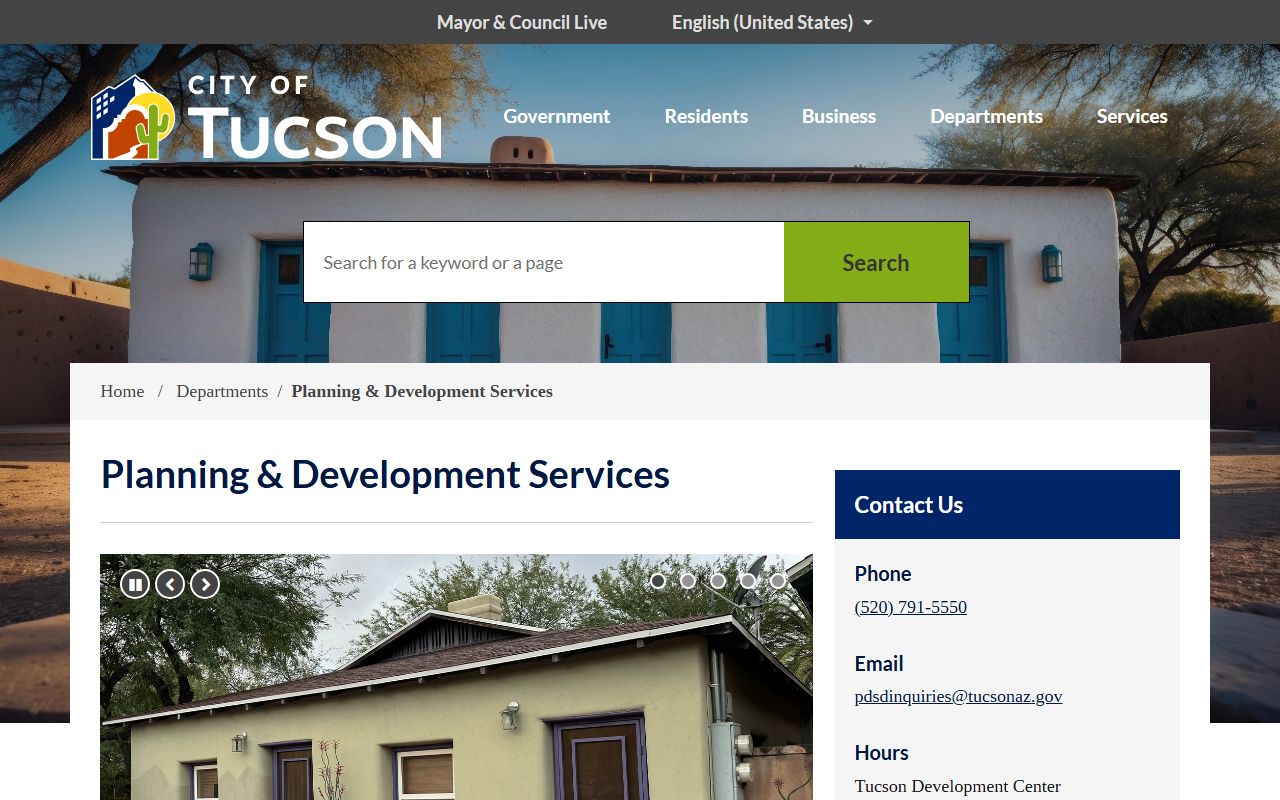
From here you can learn about permit requirements for home improvements, additions, pools, and other construction projects. The department also handles code enforcement if you have questions about what is allowed on your property or want to report violations nearby.
Tucson uses a Tucson Development Center online portal for permit applications and project tracking.
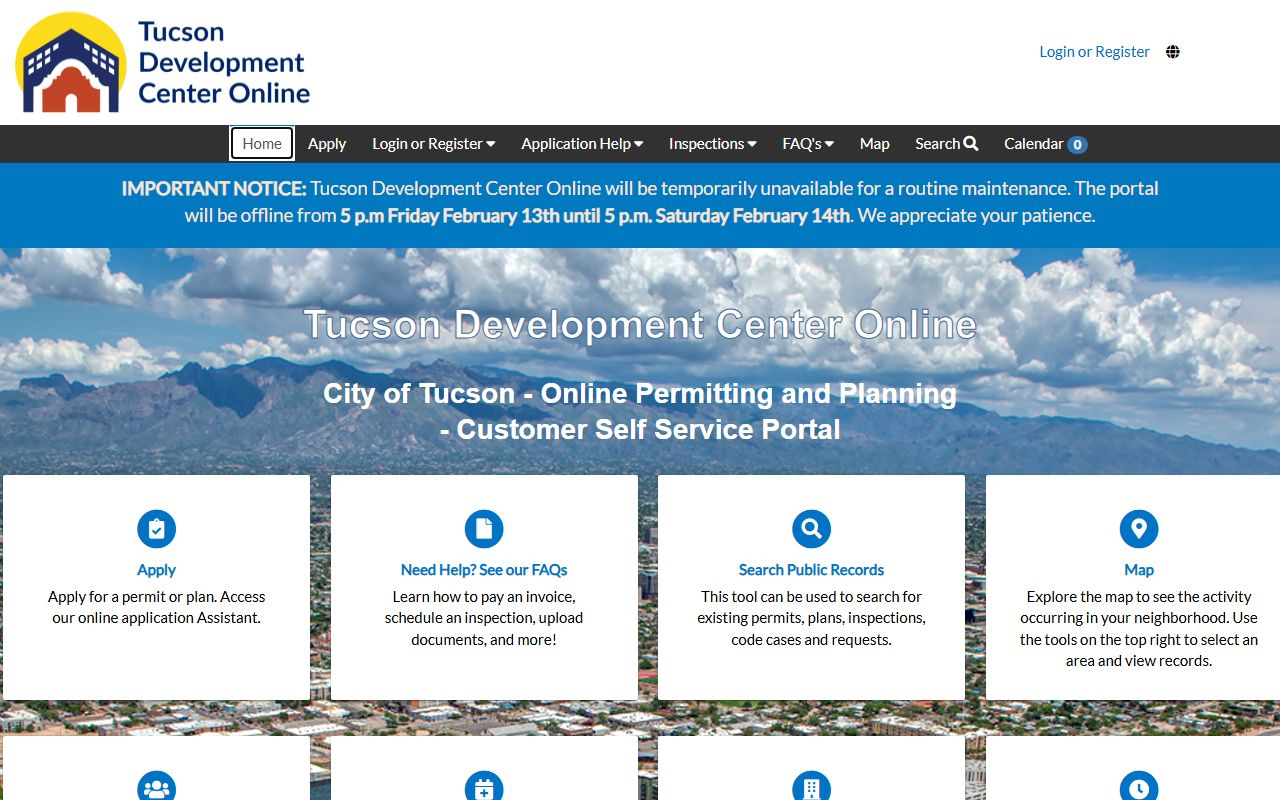
This system lets contractors and homeowners submit applications, upload plans, schedule inspections, and check permit status without visiting the office. Creating an account is free. The portal saves time for anyone working on multiple projects in Tucson.
Tucson Property Research Tools
Tucson provides several online tools for researching property information beyond just recorded documents. The Property Research Online (PRO) system gives access to permit history, zoning, and development information for any address in the city.
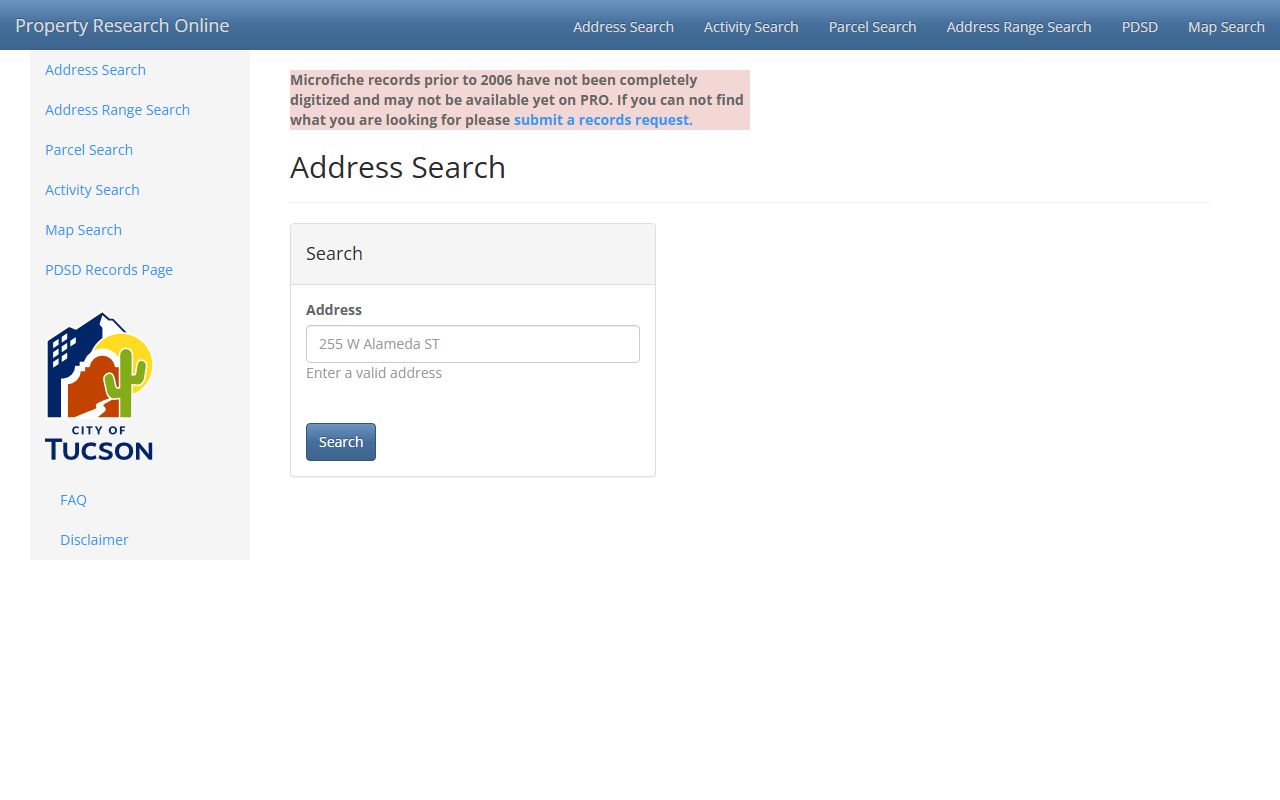
PRO shows permit records dating back many years. You can see what work has been done on a property, whether permits were finalized, and basic zoning information. This helps buyers understand a property's history before purchase. Unpermitted work can create problems during sales or insurance claims.
For mapping and spatial research, MapTucson provides an interactive GIS viewer covering the city.
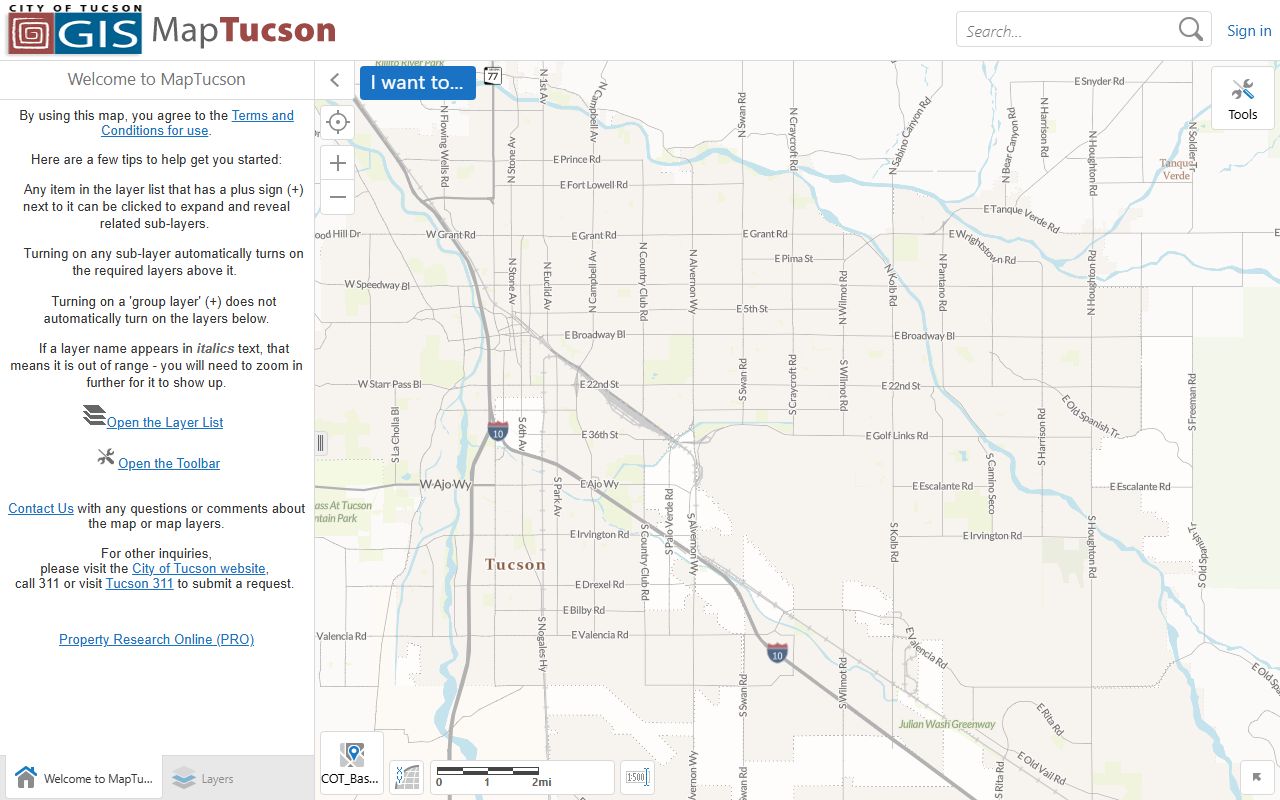
The map shows parcel boundaries, zoning districts, aerial imagery, and various city data layers. You can search by address, pan around the city, and click parcels to see details. MapTucson works well for understanding a property's location, nearby land uses, and neighborhood context. Combining the GIS tool with recorded documents from Pima County gives you a complete picture of any Tucson property.
Types of Property Documents in Tucson
The Pima County Recorder handles several document types for Tucson properties. Understanding what each document does helps you know which records to search.
Warranty deeds transfer property ownership with guarantees from the seller. When you buy a home in Tucson, you typically receive a warranty deed at closing. The deed lists the buyer and seller names, legal description of the property, and the date of transfer. Warranty deeds promise that the seller has good title and the right to sell.
Quit claim deeds also transfer ownership but make no promises about the title. These are common between family members, divorcing spouses, or to fix errors in earlier deeds. A quit claim simply transfers whatever interest the grantor has, which might be full ownership or might be nothing at all.
Deeds of trust secure mortgage loans. Arizona uses deeds of trust rather than traditional mortgages. The deed of trust names a trustee who can sell the property through foreclosure if the borrower defaults. Once you pay off your loan, the lender records a deed of reconveyance to release the lien. Checking for outstanding deeds of trust shows whether a property has mortgage debt.
Other recorded documents include mechanics liens from contractors, HOA liens, tax liens, easements, and various legal notices. Each creates a public record that affects the property until released or resolved.
Tucson Property Tax Records
The Pima County Assessor sets property values for Tucson real estate each year. You can search their website to find assessed values, ownership information, and property characteristics for any parcel in the county. The assessor determines both full cash value (market value) and limited property value (used for tax calculations).
Property tax bills come from the Pima County Treasurer. Taxes are due in two installments. The first half is due October 1 and becomes delinquent after November 1. The second half is due March 1 and becomes delinquent after May 1. You can pay online through the Pima County tax payment portal.
When buying property in Tucson, check the tax status before closing. Unpaid taxes can become liens that transfer with the property. The treasurer's website shows payment history and any delinquent amounts. Your title company will typically verify taxes are current as part of the closing process.
Arizona Recording Laws for Tucson
Arizona statutes govern how property documents must be recorded in Tucson and throughout the state. Under A.R.S. 33-411, an unrecorded instrument affecting real property does not give notice to later purchasers. This means recording your deed protects your ownership rights against others who might claim an interest.
Document requirements are set by A.R.S. 11-480. Every instrument must have a caption stating what it is, such as warranty deed or deed of trust. Documents need proper margins and must be legible enough for the recorder to make certified copies. The first page needs a two-inch top margin for the recorder to stamp.
Recording fees are uniform across Arizona under A.R.S. 11-475. Since July 2019, most documents cost $30 to record regardless of page count. This simplified the old per-page fee system. Government recordings cost $15. These fees apply in Pima County and every other Arizona county.
Nearby Arizona Cities
Tucson is the largest city in Pima County and southern Arizona. Other communities in the region also file property records through the Pima County Recorder. Make sure you know which city or unincorporated area a property sits in when researching permits and zoning since each jurisdiction has different rules.
Phoenix and the east valley cities are about 100 miles north of Tucson. Properties in those areas file through Maricopa County instead. Major Maricopa County cities include Phoenix, Mesa, Chandler, and Gilbert.
Casa Grande lies between Tucson and Phoenix in Pinal County. Properties there file with the Pinal County Recorder. Always verify which county a property is in before searching records. County boundaries matter for recording even when cities seem close together.