
Tempe Property Records Search
Tempe property records document ownership and encumbrances on real estate in this university city east of Phoenix. The Maricopa County Recorder maintains these records, which include deeds, mortgages, liens, and easements. You can search the county database online to find documents affecting Tempe properties. The system has over 50 million records going back to 1871. Tempe is home to Arizona State University, which makes the property market active with student housing, rentals, and development near campus. Whether you're a homeowner, investor, or researcher, the county's online tools let you access Tempe property records from anywhere.
Tempe Quick Facts
Recording Tempe Property Documents
Property deeds for Tempe go to the Maricopa County Recorder's Office in Phoenix. The city of Tempe does not record deeds. Arizona assigns this responsibility to counties, and Tempe falls within Maricopa County. Every deed, mortgage, or lien affecting Tempe real estate must be recorded at the county level to give public notice.
The Maricopa County Recorder's Office sits at 301 W Jefferson St, Suite 200 in Phoenix. That's about 10 miles west of downtown Tempe. Hours run Monday through Friday from 8:00 AM to 5:00 PM. You can record documents in person with no appointment needed. The staff stamps your document and returns it immediately.
Mail recording works too. Send your document with a check for the recording fee. Allow 2 to 4 weeks for processing. Most title companies in Tempe use e-recording through vendors like Simplifile. Electronic recording is faster and makes documents searchable right away. Over 90 percent of Maricopa County recordings now happen electronically.
Note: The recorder's office cannot give legal advice or help prepare documents for you.
Search Tempe Property Records Online
The Maricopa County document search gives online access to Tempe property records. Search by owner name, address, subdivision, or legal description. The database returns matching documents with recording dates, instrument numbers, and document types.
Basic searches are free. You can see what documents exist without paying anything. Viewing the actual document image or getting a copy costs extra. Certified copies for legal use have an additional certification fee. These charges help fund the records system.
Tempe's built-out urban character means most properties have longer histories. Unlike newer suburbs, Tempe parcels may have changed hands many times since the 1950s or earlier. A title search might pull up dozens of documents. The online system makes sorting through this history manageable.
Tempe Planning and Permit Records
Tempe handles its own planning and development records separate from the county. The Tempe Planning Division manages zoning, land use, and development review. You can reach them at 480-350-4311 or email PermitCenter@tempe.gov.
The city's Citizen Access portal provides online access to permit information. You can search for permits by address, contractor, or permit number.
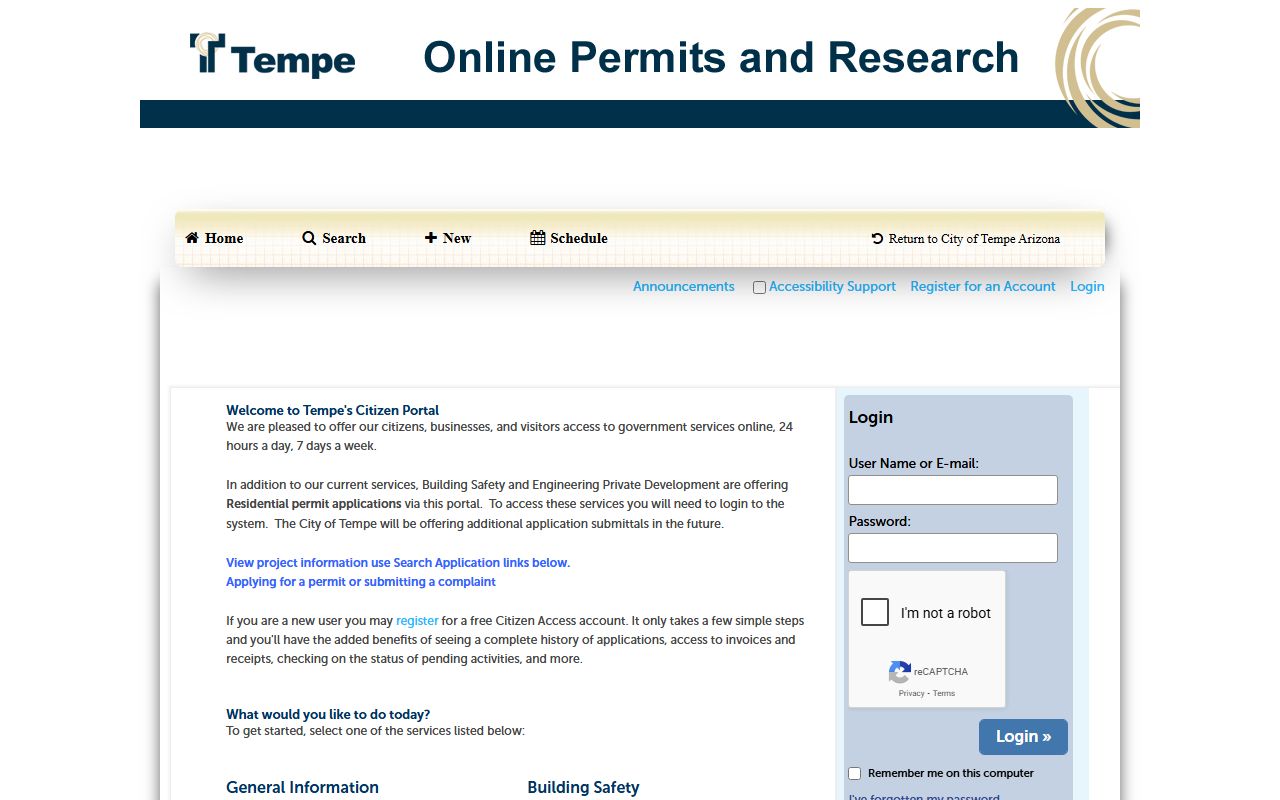
This portal shows building permits, inspections, and code enforcement cases for any Tempe address. Property buyers use it to verify that additions or renovations were properly permitted. Investors check what work has been done before buying rental properties. The system also shows active permits, so you can see if construction is underway.
Zoning records tell you what uses are allowed on a Tempe parcel. The city has residential, commercial, industrial, and mixed-use zones. Areas near ASU have special zoning for student housing. Downtown Tempe has overlay districts that encourage density. The planning division can explain what you can and cannot build at any location.
Requirements for Tempe Property Documents
Documents recorded for Tempe properties must meet Arizona standards. A.R.S. 11-480 requires each document to have a caption stating its nature. Margins must be at least one-half inch on all sides, with two inches at the top of the first page for the recorder's stamp. The document must be an original and legible enough to make copies.
Deeds transferring Tempe property need an Affidavit of Property Value or exemption code. A.R.S. 11-1133 requires this for the county assessor to track sales prices. Common exemptions include transfers between spouses, to or from trusts, and gifts between family members. Without the affidavit or exemption, the recorder will reject the deed.
All conveyances must be signed by the grantor and notarized. Under A.R.S. 33-401, deeds must be acknowledged before an authorized officer. Most people use a notary public. The notary verifies the signer's identity before witnessing the signature.
Fees for Tempe Property Recordings
Recording fees for Tempe documents follow the state schedule in A.R.S. 11-475. Most documents cost $30 to record. This flat fee covers deeds, deeds of trust, releases, assignments, and similar instruments.
Other fees at the recorder's office:
- Standard document: $30.00
- Government agency recording: $15.00
- Copy: $0.50 to $1.00 per page
- Certification: $1.50 to $3.00 additional
The office takes cash, checks, and credit cards. For mail recordings, send a check payable to Maricopa County Recorder. Include the exact amount with your document. Wrong fees mean your document comes back unrecorded.
Tempe Property Valuations and Taxes
The Maricopa County Assessor sets property values for Tempe. Eddie Cook serves as assessor. The office values every parcel for property tax purposes. You can look up any Tempe property through the county parcel viewer.
The parcel viewer shows ownership info, assessed values, lot size, and building details. It's free to use. Enter an address or click on the map to find a specific property. This tool complements the recorder's database by showing who currently owns a property and what it's worth for taxes.
Property taxes in Tempe go to the Maricopa County Treasurer. Payment deadlines are October 1 for the first half and March 1 for the second half. Late payments add interest and penalties. Seriously delinquent properties can end up in the county tax lien sale, where investors buy the right to collect the unpaid taxes.
Title Searches for Tempe Real Estate
A title search examines all recorded documents affecting a Tempe property. It confirms the seller owns the property and can transfer it. It reveals liens, easements, and restrictions that could affect your use. Title companies run these searches before every closing.
The county database lets you do basic searches yourself. Enter a name or address and see what comes up. But thorough searches go further. Professional title examiners check for judgment liens, tax liens, HOA assessments, and pending litigation. They make sure the legal description actually describes the property you think you're buying.
Tempe properties often have multiple recorded documents. A home might have the original deed, a mortgage, a refinance, HOA amendments, and utility easements. Near ASU, investment properties may have been sold and refinanced several times. All these transactions leave records that a title search must review and verify.
Note: Title insurance protects buyers if the search misses something, which is why lenders require it.
Types of Tempe Property Records
Several document types show up in Tempe property searches. Warranty deeds transfer ownership with a guarantee of clear title. They're standard for home sales. Quit claim deeds transfer whatever interest the grantor has but promise nothing. People use them for transfers between family members or to clear up title questions.
Deeds of trust secure loans. Arizona uses deeds of trust instead of mortgages for most home loans. The trustee holds the property title until you pay off the loan. Then the lender records a full reconveyance to release the lien. If you default, the trustee can sell the property without going to court.
Other recorded documents include easements granting rights to cross or use property, mechanic's liens from unpaid contractors, and HOA declarations establishing community rules. Tax liens show up when property taxes go unpaid. Judgment liens appear when courts award money damages. Each document type tells part of the property's story.
Nearby Arizona Cities
Tempe sits in the east valley surrounded by other large cities. All are in Maricopa County and use the same recorder's office for property documents. The city borders curve around Arizona State University campus.
Adjacent cities include Phoenix to the north and west, Scottsdale to the northeast, Mesa to the east, and Chandler to the south. Gilbert is further southeast. Some properties sit right on city boundaries, so verify which city actually serves an address before completing transactions.